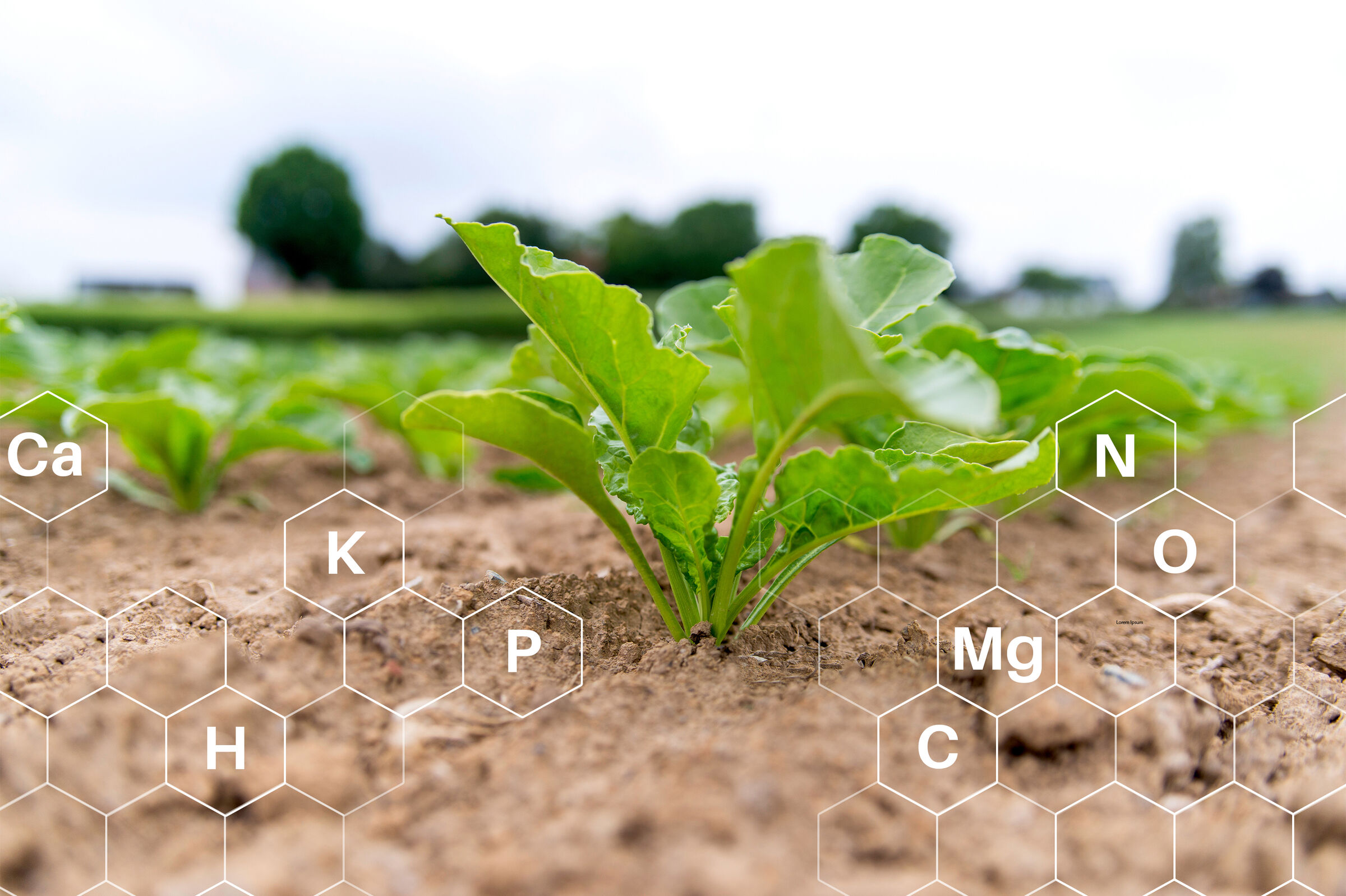
For years, SESVanderHave has been investigating how nitrogen fertilisation can be optimised to make sugar beet cultivation more sustainable and efficient. Based on the nitrogen trials (N-trials) of the past two years, some important preliminary conclusions can be drawn. These results offer valuable insights for growers, despite the fact that the trials took place in relatively late sowing conditions and wet years.
Need for nitrogen: Balance is crucial
The nitrogen consumption of a beet crop is between 180 and 220 kg N per hectare, especially during the period from the six- to eight-leaf stage to full root development. This is the stage when the beet grows optimally. Interestingly, the trials show that at nitrogen inputs above 100 kg N per hectare, no significant increase in root yield is observed anymore. This highlights the importance of balanced fertilisation.
The nitrogen efficiency of beet is already reasonably high. Thanks to breeding, sugar yields have increased significantly in recent decades, without an increase in fertilisation. In other words, more is produced with the same input.
Consequences of excessive nitrogen application
Excessive nitrogen application can have negative consequences for both sugar beet yield and crop quality:
- Excessive leaf mass: At the end of the growing season, excess nitrogen leads to excessive leaf formation. This comes at the expense of sugar production.
- Decrease in sugar content: Too much nitrogen lowers sugar content in the beet and hence sugar richness.
- Lower sugar yield per hectare: Due to lower sugar richness and less efficient sugar production per beet.
- Increase in impurities: Nitrogen excess increases the level of impurities in the beet, negatively affecting processability and profitability.
Environmental impact: Less nitrogen for lower carbon footprint
The study shows that nitrogen fertilisation is a determining factor in the carbon footprint of sugar beet production. Reducing nitrogen fertilisation can therefore significantly contribute to crop sustainability.
Innovative techniques and varieties for more efficient fertilisation
Our research also shows that innovative fertilisation techniques and well-adapted varieties can contribute to a more efficient use of nitrogen:
- Row fertilisation: This technique allows nitrogen fertilisation to be reduced by 10-15%, without yield loss.
- Suitable varieties: Sugar beet varieties with many leaves and relatively good drought tolerance seem to perform better at lower nitrogen inputs. These varieties close the rows faster, providing more efficient nutrient utilisation.
- Sensitivity to nitrogen excess: Some varieties react strongly to excess nitrogen, causing extra leaf formation, which can be detrimental to sugar production. This highlights the importance of a careful fertilisation strategy.
SESVanderHave research underlines the importance of balanced nitrogen fertilisation in sugar beet cultivation. Excess nitrogen not only leads to quality losses and lower yields, but also has a negative impact on the environment. By using innovative fertilisation techniques and well-adapted varieties, growers can reduce their nitrogen use while optimising the yield and quality of their beet. This is how SESVanderHave is working towards a sustainable future for sugar beet cultivation.